ISO Lead
Implementer Courses
Develop the knowledge and skills to plan, implement and improve management systems with ICTQual AB ISO Lead Implementer Courses.
-
Practical
Implementation Skills -
Globally
Recognised Standards -
Applicable
Across Industries -
Supports
Career Development
What is an ISO Lead Implementer Course?
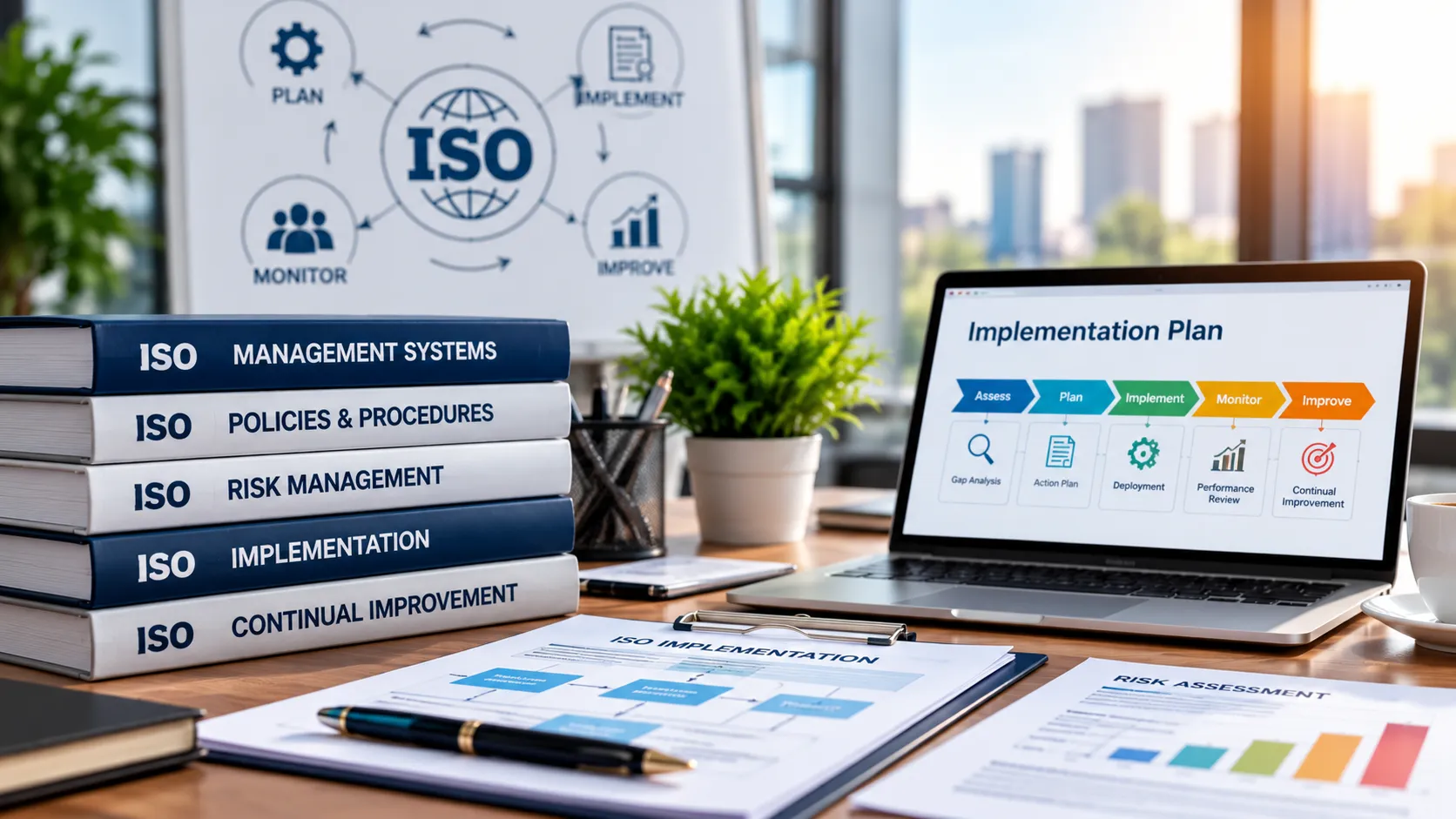
An ISO Lead Implementer Course develops knowledge of how to establish, implement, maintain and continually improve a management system based on a specific ISO standard.
A Lead Implementer needs to understand the relevant standard, evaluate organisational requirements, coordinate implementation activities and support the integration of management system processes into everyday operations. This may involve reviewing existing procedures, identifying gaps, developing implementation plans, allocating responsibilities, managing documentation and monitoring progress.
The precise responsibilities depend on the management system being implemented. For example, a Quality Management System focuses on consistent processes and customer satisfaction, while an Environmental Management System addresses environmental aspects, impacts and performance.
Explore Our ISO Lead Implementer Courses
Choose a course according to your professional interests, organisational responsibilities and the management system you want to implement.


Who Should Take an ISO Lead Implementer Course?
Our ISO Lead Implementer courses are suitable for professionals who want to develop their management system implementation knowledge and practical skills.
Quality Managers
Health and Safety Professionals
Environmental Professionals
IT and Security Professionals
Compliance Officers
Consultants and Implementation Specialists
Career Developers
How to Choose the Right Lead Implementer Course
Follow these six steps to identify a course that aligns with your professional responsibilities, learning needs and career goals.
Identify Your Professional Goals
Decide whether you want to develop implementation skills, progress professionally or expand your responsibilities.
Select the Relevant ISO Standard
Choose the management system most relevant to your industry, role and organisational requirements.
Review the Course Content
Check the syllabus, implementation topics, learning outcomes and practical skills covered.
Check Entry Requirements
Review the stated entry criteria, recommended experience and any prior knowledge needed.
Confirm Delivery Options
Consider the available study format, assessment arrangements, timetable and support for Learners.
Plan Your Next Learning Step
Consider how the qualification fits your wider professional development and future training plans.
Lead Implementer vs Internal Auditor vs Lead Auditor
These roles contribute to effective management systems in different ways. Understanding their responsibilities can help you select training that matches your professional objectives.
Lead Implementer
Focuses on establishing, implementing, maintaining and improving a management system in line with the applicable standard and organisational requirements.
- ✓ Establishes and improves a management system.
- ✓ Plans and coordinates implementation activities.
- ✓ Develops procedures and supporting documentation.
- ✓ Supports monitoring and continual improvement.
Internal Auditor
Examines whether a management system and its processes conform to applicable requirements and operate effectively.
- ✓ Evaluates management system processes.
- ✓ Plans and conducts internal audits.
- ✓ Identifies nonconformities and improvement opportunities.
- ✓ Reports findings and supports corrective action follow-up.
Lead Auditor
Leads an audit team and coordinates audit activities within an agreed scope, using applicable audit criteria.
- ✓ Leads and coordinates audit activities.
- ✓ Organises audit tasks and team responsibilities.
- ✓ Reviews and evaluates audit evidence and findings.
- ✓ Prepares or oversees the audit report and conclusions.