
Level 3 Guide: Quality Assurance Scenario Exercises
Principles of Quality Assurance and Control Systems
Introduction
In the manufacturing sector, understanding the distinction between Quality Assurance (QA) and Quality Control (QC) is vital for maintaining operational efficiency and compliance with UK legislation. While QA focuses on the processes to prevent defects, QC focuses on identifying defects in the final product.
As a Quality Technician, you are not just checking boxes; you are ensuring that the organization adheres to the Consumer Protection Act 1987 and the Health and Safety at Work etc. Act 1974, while utilizing international standards such as ISO 9001:2015 (as adopted in the UK). This worksheet requires you to apply these principles to real-world workplace scenarios to demonstrate your competency in managing quality systems.
Learner Task
Scenario 1: The Precision Aerospace Component Line
Context:
You are working at Midlands Precision Engineering, a UK-based firm supplying parts for aerospace engines. The facility has recently seen an increase in “rework” (parts that failed initial inspection and need fixing).
Your Instructions:
- Categorize Activities: Below is a list of actions taken last week. Label each as either Quality Assurance (QA) or Quality Control (QC).
- Calibrating the micrometers used to measure bolt diameters.
- Visual inspection of the finished turbine blades.
- Reviewing the training records of the lathe operators to ensure they are up to date.
- X-raying a batch of welds to check for internal cracks.
- Competency Application: Explain how ensuring the “QA” activities are done correctly reduces the financial burden of the “QC” failures.
Scenario 2: Dealing with Non-Conformance at British Bottling Ltd
Context:
During a production run of glass bottles at a plant in Yorkshire, a sensor detects that 5% of the bottles have “thin spots” in the glass, making them prone to shattering.
Your Instructions:
- Corrective Action: Define the immediate Corrective Action required to handle the current batch of defective bottles to ensure compliance with the Consumer Protection Act 1987.
- Preventive Action: Propose two Preventive Actions the maintenance and quality teams should take to ensure this mechanical fault does not recur in future production cycles.
- UK Regulation Link: Briefly state why failing to implement a “Preventive” approach in this scenario could lead to legal liabilities under UK Health and Safety law.
Scenario 3: Implementing the PDCA Model
Context:
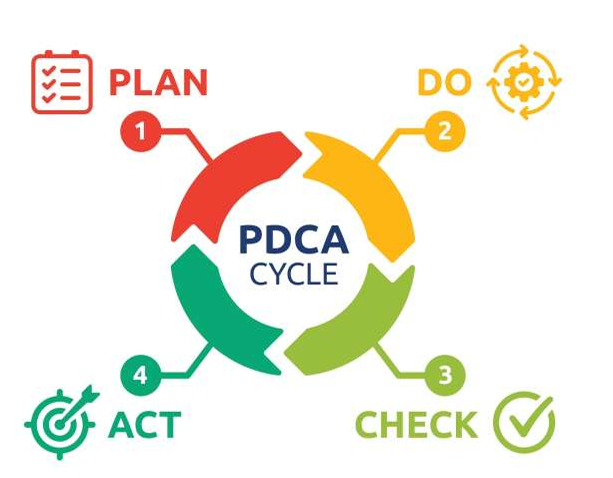
A furniture manufacturer in High Wycombe wants to improve its “Right First Time” (RFT) rate. They have decided to use the Plan-Do-Check-Act (PDCA) cycle to monitor their new automated sanding process.
Shutterstock
Your Instructions:
Complete the table below by describing a specific vocational action a Quality Technician would take at each stage of the model for this specific sanding process.
| PDCA Stage | Vocational Action (What will you specifically do on the shop floor?) |
| Plan | |
| Do | |
| Check | |
| Act |
Scenario 4: UK Regulatory Compliance & Quality Auditing
Context:
You are preparing for an internal audit based on ISO 9001 standards. The auditor is looking for evidence that the factory is meeting UK-specific regulatory requirements for product safety.
Your Instructions:
- Traceability: Describe the process you would use to “trace” a defective raw material back to a UK supplier if a failure is found during the manufacturing process.
- Documentation: Identify three types of records/documents that must be kept onsite to prove that the manufacturing process is “in control” during a legal inspection by a UK authority.