
Electrical Project Planning: Effective Terminology-to-Application Techniques
Electrical Project Planning, Risk, and Compliance Management
Introduction
This vocational assessment focuses on advanced electrical quality assurance within complex project environments. This task rigorously evaluates your strategic decision-making capabilities and your ability to apply advanced project planning techniques to real-world electrical installations. You are required to demonstrate a deep understanding of standard industry practices and quality control integration.
- Focus on advanced project planning techniques for large-scale operations.
- Evaluation of strict compliance with current UK standards.
- Integration of meticulous quality control processes into active projects.
Purpose of Task
The core objective is strategic selection and decision making in high-stakes operational environments. You must move entirely beyond duplicating glossary terms and demonstrate high-level professional judgment. This competency involves carefully balancing budget constraints, critical safety imperatives, and long-term operational efficiency.
- Force a strategic, documented choice between complex technical options.
- Demonstrate clear financial literacy in electrical project planning.
- Justify operational strategy using high-level vocational competency.
Concept Explainer Sheet
This sheet clarifies the specific vocational principles required for strategic procurement and risk management in electrical engineering. It bridges the critical gap between theoretical knowledge and practical, on-site application in the field. Understanding these concepts is vital for effective risk management and ensuring flawless operational delivery.
- Strategic Procurement: Selecting systems based on lifecycle value and UK regulatory compliance.
- Efficiency Trade-offs: Balancing initial capital expenditure against operational longevity and maintenance.
- Risk Matrix Application: Evaluating severe hazards according to current Health and Safety Executive guidelines.
Complex Scenario Context
You are managing a major commercial electrical installation project located in a high-density area of central London. The project faces strict budget limits, tight operational deadlines, and rigorous safety audits from external regulatory bodies. A critical decision must be made immediately regarding the primary electrical distribution and monitoring system to be installed throughout the facility.
- The location involves high-density commercial infrastructure requiring complex logistics.
- Strict adherence to the Electricity at Work Regulations is mandatory for all phases.
- The project requires the seamless integration of advanced quality control measures from day one.
Strategic System Options
You must evaluate two distinct electrical distribution systems for immediate procurement and deployment. System Alpha offers lower initial procurement costs but requires heavily scheduled manual compliance checks and intensive labor for maintenance. System Beta requires a significantly higher initial capital outlay but features fully automated monitoring, enhanced safety diagnostics, and predictive failure alerts.
- System Alpha: Traditional architecture, lower upfront capital cost, high manual monitoring requirement.
- System Beta: Advanced automated diagnostics, higher initial investment, real-time compliance tracking.
- Your final choice directly and irreversibly impacts the overall project risk profile and maintenance schedule.
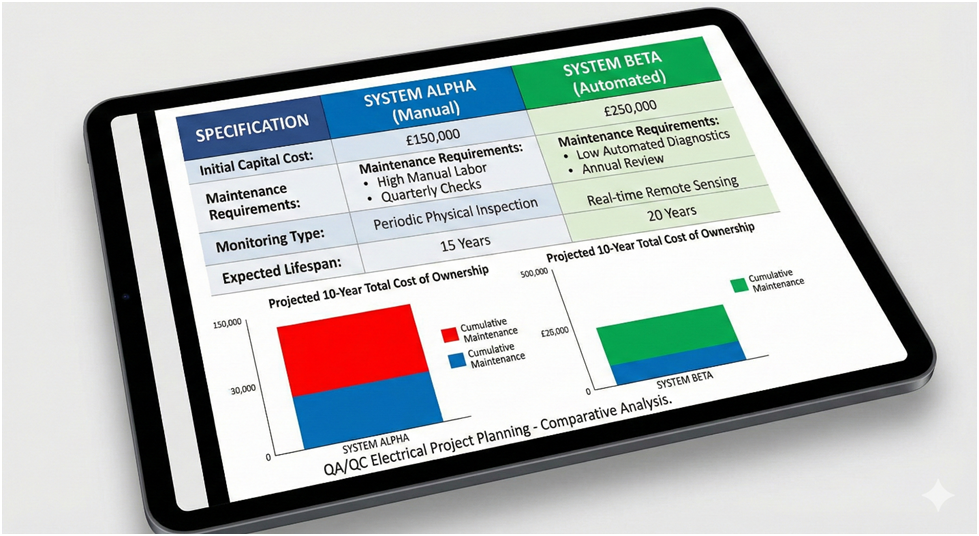
Risk and Compliance
Evaluating the inherent risks associated with these differing distribution systems is a mandatory competency requirement for this qualification. The chosen system must strictly adhere to the BS requirements for electrical installations and ensure absolute safety for end-users. Failure to maintain absolute compliance will result in severe legal repercussions and complete project shutdown.
- Assess complex risks using established UK safety frameworks and methodologies.
- Ensure absolute adherence to current BS wiring regulations and codes of practice.
- Identify and document potential compliance gaps long before the physical installation begins.
Operational QA Integration
Integrating comprehensive quality assurance into your master project schedule is absolutely essential for successful, timely delivery. The chosen system must align perfectly with the complex resource allocation constraints of your current engineering team. This requires meticulous forward planning and continuous, documented monitoring of all electrical testing activities.
- Map specific quality control testing processes directly to major project milestones.
- Allocate highly competent, certified personnel for critical system installation and testing phases.
- Establish robust compliance monitoring logs to track all inspection outcomes.
Strategic Financial Planning
Financial literacy is crucial when recommending strategic procurement decisions in a professional management capacity. You must justify your system choice based on long-term operational costs, potential downtime risks, and maintenance overheads. The allocated budget must be managed expertly without ever compromising the safety or integrity of the final installation.
- Analyze the total lifecycle costs of each system over a ten-year operational period.
- Evaluate the severe financial impact of potential compliance failures or system downtime.
- Justify the capital expenditure using competency-based logic and strategic foresight.
Strategic Procurement Flow Diagram:
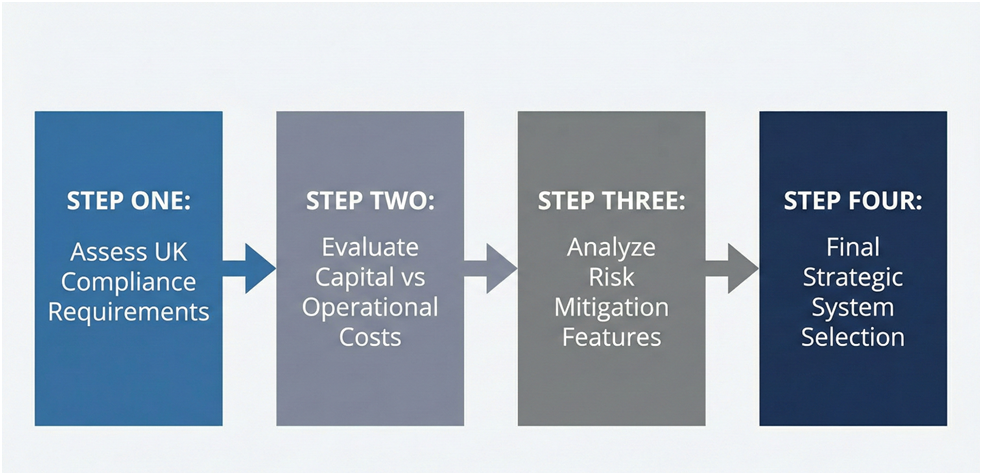
Assessed Learner Task
Based on the complex scenario provided above, you must produce a comprehensive vocational response demonstrating high-level judgment. Your primary task is to critically justify your selection between System Alpha and System Beta based on safety, efficiency, and budget trade-offs. You will document this strategic decision using the specified evidence format to prove your competency in project planning.
- Make a definitive, binding choice between the two proposed electrical systems.
- Provide a detailed, professional justification based on safety regulations and operational efficiency.
- Develop a comprehensive analysis that integrates this choice into the project lifecycle.
Task Evidence Requirement
To demonstrate your competency in this unit, you are required to produce highly detailed, professional-grade documentation that evaluates strategic procurement options within a complex project environment. You must make a definitive, binding choice between two proposed electrical systems and justify it using advanced risk management and financial planning principles.
EVIDENCE GENERATION REQUIREMENT:
- Risk Probability & Impact Analysis
Contextual Scenario:
You are managing a major commercial electrical installation project located in a high-density area of central London. You must make an immediate procurement decision between System Alpha, which has a lower upfront cost but requires intensive manual compliance checks, and System Beta, which requires a higher initial investment but provides advanced automated diagnostics and real-time compliance tracking. Your final choice will irreversibly impact the overall project risk profile and maintenance schedule.
Task Execution:
Develop a comprehensive Risk Probability & Impact Analysis that strategically evaluates both systems and justifies your final procurement decision.
- Step 1: Analyze the specific compliance risks associated with System Alpha’s high manual monitoring requirement versus System Beta’s automated diagnostics.
- Step 2: Evaluate how each system adheres to the mandatory Electricity at Work Regulations and current BS wiring regulations. Specifically, note the probability of human error in manual checks versus the reliability of automated real-time remote sensing.
- Step 3: Calculate the risk impact by analyzing the total lifecycle costs over a ten-year operational period. You must balance the initial capital expenditure against potential downtime risks and maintenance overheads.
- Step 4: Document the severe hazards and potential legal repercussions of a compliance failure for each system using established Health and Safety Executive guidelines.
- Step 5: Conclude your analysis with a binding, strategically justified recommendation on which system to procure based on safety regulations and operational efficiency.
Task Submission Guidelines
- Your final submission must be formatted as a formal, professional-grade project planning report.
- Ensure all safety references and regulatory citations align strictly with current UK standards.
- The document must be entirely free of theoretical fluff or academic generalizations, focusing strictly on vocational application and definitive decision-making.
- Submit the completed Risk Probability & Impact Analysis as a standard PDF document.