
Health & Safety Management System: Best Practices for Topic Briefing Tasks
Health and Safety Management System (HSMS)
Introduction
This Knowledge Provision Task (KPT) is designed to guide learners through the core principles, legal frameworks, and operational methodologies required to design, implement, and lead a robust Health and Safety Management System (HSMS). Operating at a Level 8 professional standard requires moving beyond basic compliance; it demands the strategic integration of risk management, advanced hazard analysis, and continuous improvement into the core operations of an engineering or industrial organization.
This document serves as your foundational Topic Briefing Sheet. It synthesizes the complex theoretical and regulatory elements of the unit into actionable, assessor-prepared notes to support your development of competency-based evidence.
A. Knowledge Guide: Topic Briefing Sheet
1. Internationally Recognized HSMS Frameworks (ISO 45001 & ANSI Z10)
A Health and Safety Management System (HSMS) is a systematic, process-driven approach to managing workplace safety risks and improving performance.
- ISO 45001: This is the global standard for Occupational Health and Safety (OHS) management systems. It is built on the Annex SL high-level structure, ensuring compatibility with other standards like ISO 14001 (Environment) and ISO 9001 (Quality). It heavily emphasizes leadership commitment, worker participation, and proactive risk mitigation.
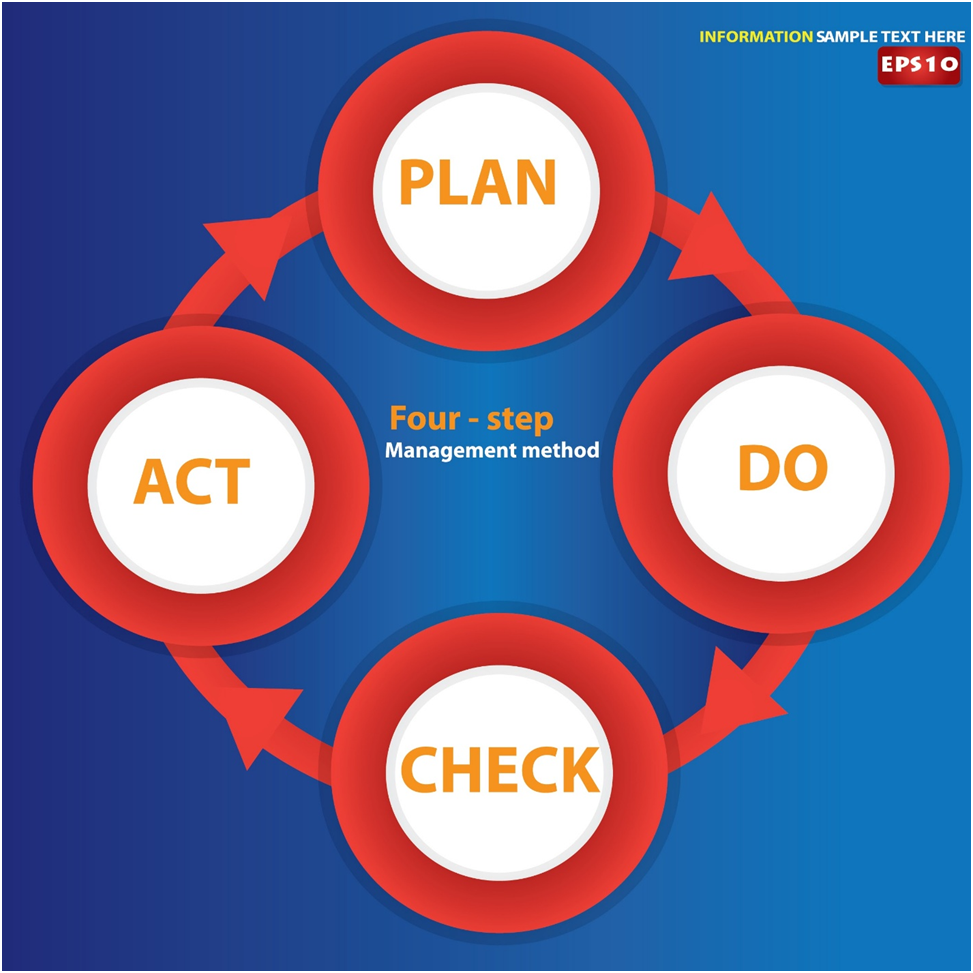
- The PDCA Cycle: ISO 45001 operates on the Plan-Do-Check-Act cycle:
- Plan: Determine and assess OHS risks, opportunities, and objectives.
- Do: Implement the processes as planned.
- Check: Monitor and measure activities and processes against the OHS policy.
- Act: Take actions to continually improve OHS performance.
- ANSI Z10: While primarily a US standard, its principles are globally relevant. It focuses heavily on safety management system architecture, incident investigation, and the hierarchy of controls.
2. UK Legal and Regulatory Context
In a UK operational environment, an HSMS must be underpinned by strict adherence to national legislation. As a Level 8 practitioner, you must ensure organizational compliance with the following foundational laws:
- Health and Safety at Work etc. Act 1974 (HASAWA): This is the primary piece of legislation covering occupational health and safety in Great Britain. It outlines the general duties of employers to ensure, so far as is reasonably practicable, the health, safety, and welfare of all employees, as well as the protection of non-employees (contractors, the public) from workplace activities. Crucially, Section 2(3) mandates that employers with five or more employees must have a written health and safety policy.
- Management of Health and Safety at Work Regulations 1999 (MHSWR): These regulations clarify what employers must do to manage health and safety under HASAWA. The core vocational requirement is conducting suitable and sufficient risk assessments (Regulation 3) and implementing appropriate arrangements for managing health and safety (Regulation 5).
3. The Hierarchy of Hazard Control
To eliminate or minimize workplace risks, safety professionals must apply the hierarchy of control measures in a structured, sequential manner.
- Elimination: The most effective control. Physically removing the hazard entirely from the workplace (e.g., outsourcing a hazardous manufacturing process).
- Substitution: Replacing a hazardous material or process with a less hazardous one (e.g., swapping a toxic solvent for a water-based alternative).
- Engineering Controls: Isolating personnel from the hazard. This includes physical changes to the work environment (e.g., machine guarding, local exhaust ventilation).
- Administrative Controls: Changing the way people work through procedures, training, job rotation, and signage to limit exposure time.
- Personal Protective Equipment (PPE): The absolute last line of defense. Only relied upon when all other controls are insufficient (e.g., respirators, safety harnesses).
4. Advanced Risk Analysis and Identification Techniques
Level 8 competency requires the utilization of advanced analytical tools to preemptively identify system failures and hazard points:
- Failure Modes and Effects Analysis (FMEA): A step-by-step approach for identifying all possible failures in a design, a manufacturing process, or a product or service. It evaluates the severity, occurrence, and detectability of risks.
- Fault Tree Analysis (FTA): A top-down, deductive failure analysis using Boolean logic to analyze the pathways within a system that can lead to a specific undesirable event (the “top event”).
- Fishbone Analysis (Ishikawa Diagram): A visual tool used in root cause analysis to categorize the potential causes of a problem to identify its root causes (typically structured around Equipment, Process, People, Materials, Environment, and Management).
- What-If and Checklist Analysis: Structured brainstorming methods used to determine what things can go wrong and judging the likelihood and consequences of those situations occurring.
- Risk Matrix Methodologies: Utilizing quantitative or semi-quantitative matrices to evaluate the likelihood against the severity of a hazard, allowing organizations to prioritize high-risk areas and allocate resources effectively.
5. Hazardous Materials and Energy Control
- Globally Harmonized System (GHS): An international system for standardizing and harmonizing the classification and labeling of chemicals. Vocational implementation requires ensuring all Safety Data Sheets (SDS) are accessible, interpreting GHS pictograms, and establishing safe chemical handling and storage procedures.
- Hazardous Energy Control (LOTO): Designing Lockout/Tagout (LOTO) programs is critical for protecting workers from the unexpected startup of machinery or release of hazardous energy during service or maintenance activities. This covers electrical, mechanical, hydraulic, pneumatic, chemical, thermal, and magnetic energy sources.
- Electrical Safety Principles: Competency in safety engineering requires a functional understanding of Ohm’s Law ($V = I \times R$), electrical power computation, impedance, resistance, and grounding to design safe circuits and conduct accurate electrical hazard risk assessments.
6. Incident Investigation and Management of Change (MOC)
- Incident Investigation: Leading investigations requires securing the scene, evidence collection, and applying structured root cause analysis to identify contributing factors. The ultimate goal is drafting Corrective and Preventive Actions (CAPA) to prevent recurrence.
- Management of Change (MOC): A systematic approach to dealing with organizational change (e.g., new equipment, altered processes, or personnel changes). MOC principles ensure that safety risks are formally assessed and mitigated before the change is implemented in the operational environment.
7. Safety Performance Indicators and Emerging Technologies
- Leading vs. Lagging Indicators: * Lagging Indicators measure past events (e.g., Total Recordable Incident Rate, lost-time injuries).
- Leading Indicators are proactive and predictive measures of performance (e.g., number of safety audits completed, percentage of management training attended, closure rate of CAPAs).
- Emerging Technologies: Modern HSMS design must integrate technological advancements such as utilizing data analytics for predictive risk modeling, deploying drones for inspecting confined spaces or working at heights, and leveraging AI for real-time risk monitoring in complex industrial setups.
B. Learner Task
Target Unit:
Health and Safety Management System (HSMS)
Aligned Learning Outcome:
LO1 – Develop a comprehensive understanding of internationally recognized Health and Safety Management Systems (HSMS) such as ISO 45001 and ANSI Z10, and their role in designing effective workplace safety programs.
The Scenario
You have recently been appointed as the Senior HSE Manager for a large-scale structural engineering firm based in the UK. The firm is transitioning its current, fragmented safety protocols into a cohesive Health and Safety Management System (HSMS) to achieve ISO 45001 certification. As the first step in this operational overhaul, executive leadership has tasked you with drafting the foundational governing document that will dictate the organization’s safety culture and compliance parameters.
Task Instructions
Based strictly on the principles outlined in the Knowledge Guide and the legal requirements of the UK Health and Safety at Work etc. Act 1974, you must formulate the evidence listed below:
Specific Evidence Required:
Development of a workplace Health and Safety Policy aligned with HSMS frameworks.
Your policy document must be highly vocational and demonstrate Level 8 competency. It should explicitly cover:
- Statement of Intent: A clear declaration of the organization’s commitment to ISO 45001 principles, injury prevention, and continuous improvement.
- Organizational Responsibilities: A breakdown of safety duties from the executive board down to individual site operators.
- Arrangements for Implementation: A summary of the systems that will be used to manage risk (e.g., hazard identification, the hierarchy of controls, and employee consultation).
Constraint:
Your submitted response for this assignment must be exactly 350 words in length. Ensure every word contributes to a concise, professional, and compliant executive policy.
C. Submission Guidelines
To ensure your assessment is processed efficiently and meets the quality assurance standards of the ICTQual AB, please adhere to the following submission protocols:
- Document Standards: Your submitted document must be dated, clearly labeled with the unit reference (ACAI0005-1), and authenticated if required by your assessor.
- Portal Upload: All portfolio evidence must be uploaded directly via your official learner portal.
- Format: Evidence must be submitted strictly in PDF or a clear scanned format.
- Naming Convention: A clear and standardized naming convention must be used for your file. For this specific task, please use: Unit1_YourName_HealthAndSafetyPolicyEvidence.