
Master Energy Management Terms with this Level 3 Glossary-Building Activity
Technical and Operational Energy Management
Purpose
The Glossary-Building Activity is designed to move learners beyond rote memorization. The goal is to operationalize energy management terminology, demonstrating the ability to:
- Identify and apply technical vocabulary in real-world energy systems
- Recognize tools, equipment, and methods by name, function, and symbol
- Link terminology to UK regulations and standards (ESOS, Part L, ISO 50001)
- Communicate effectively in technical reports, SOPs, audits, and operational planning
This ensures that learners think like energy managers, using language to make practical, safe, and efficient decisions rather than just defining terms.
Section 1: Core Technical Terms and Operational Meaning
This section presents key terms, their visual symbols, definitions, and practical application examples.
| Key Term | Visual / Symbol | Definition | Practical Example | UK Regulation / Standard Relevance |
| Boiler Efficiency | 🔥⚡ | Measure of how well a boiler converts fuel into heat | High-efficiency boiler reduces fuel costs in factories | Part L – Minimum energy efficiency for heating systems |
| Variable Frequency Drive (VFD) | 🔄⚙️ | Controls motor speed to match demand | VFD on industrial pumps saves electricity and reduces wear | ISO 50001 – Energy performance optimisation |
| Energy Audit | 📋🔎 | Assessment of energy consumption to identify improvements | Identifying high-energy areas in an office → plan for LED lighting | ESOS – Mandatory energy audits for large UK organisations |
| Sub-metering | 🏷️⚡ | Individual metering of equipment or areas to monitor energy | Measuring energy use per compressor → targeted efficiency upgrades | ESOS / ISO 50001 – Monitoring requirement |
| LED Retrofit | 💡➡️ | Replacing older lighting with LED for energy savings | 10,000 m² office switched from fluorescent → 40–50% savings | Part L – Lighting efficiency standards |
| HVAC Zoning | 🌡️🏢 | Dividing spaces to control heating/cooling separately | Office floor split into zones → reduce wasted energy in unoccupied areas | Part L – Building performance compliance |
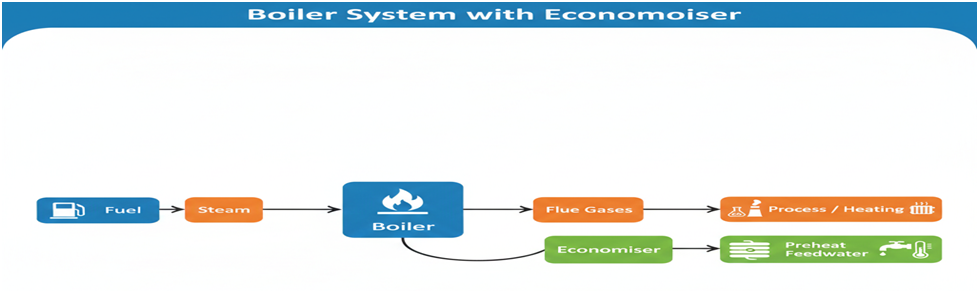
| Economiser | ♻️🔥 | Device that recovers waste heat from flue gases | Boiler economiser preheats feedwater → reduces fuel consumption | Part L – Boiler efficiency and building compliance |
| Energy KPI | 📊 | Metric to track energy performance (kWh/m², kWh/unit production) | Factory tracks kWh/unit → monitors efficiency improvements | ISO 50001 – Energy performance monitoring |
| Insulation | 🧱❄️🔥 | Material to reduce heat loss or gain | Steam line insulation → reduces heat loss by 15–20% | Part L – Building energy efficiency |
| Smart Thermostat | 🖥️🌡️ | Automated temperature controller | Adjusts heating based on occupancy → reduces energy waste | Part L – Building efficiency & smart control compliance |
Section 2: Operationalizing Vocabulary
Step 1: Matching Visual Symbols to Key Terms
Learners will be given visual symbols and a list of terms and asked to draw connections between them.
Example:
- 🔄⚙️ → Variable Frequency Drive (VFD)
- 🧱❄️🔥 → Insulation
- 📋🔎 → Energy Audit
This ensures learners can identify equipment and tools visually in the workplace, reinforcing technical literacy.
Step 2: Scenario-Based Application
Learners are presented with realistic workplace scenarios and must choose relevant key terms to solve energy management challenges.
Scenario A – Industrial Pump Efficiency
- Situation: Three large pumps run continuously at low demand. Energy bills are high. Staff notice vibrations in Pump 2.
- Expected Learner Actions:
- VFD – Adjust pump speed → reduce electricity use
- Sub-metering – Monitor individual pump energy consumption
- Energy KPI – Track kWh/unit output to measure improvement
- Preventive Maintenance – Reduce inefficiencies caused by vibration/wear
Scenario B – Office Building Lighting and HVAC
- Situation: Older fluorescent lights and single-zone HVAC system result in wasted energy in unoccupied areas.
- Expected Learner Actions:
- LED Retrofit – Replace fluorescent with LED panels
- HVAC Zoning – Separate floors into zones to reduce unnecessary heating/cooling
- Smart Thermostat – Automate schedules to match occupancy
- Energy Audit – Identify other inefficiencies like office appliances left on
Scenario C – Residential Heating Efficiency
- Situation: High winter heating bills in a multi-apartment building with poorly insulated pipes and walls.
- Expected Learner Actions:
- Insulation – Pipework, walls, and roof
- Smart Thermostat – Occupancy-based control
- Boiler Efficiency / Economiser – Upgrade boiler and capture waste heat
Section 3: Practical Visual Diagrams
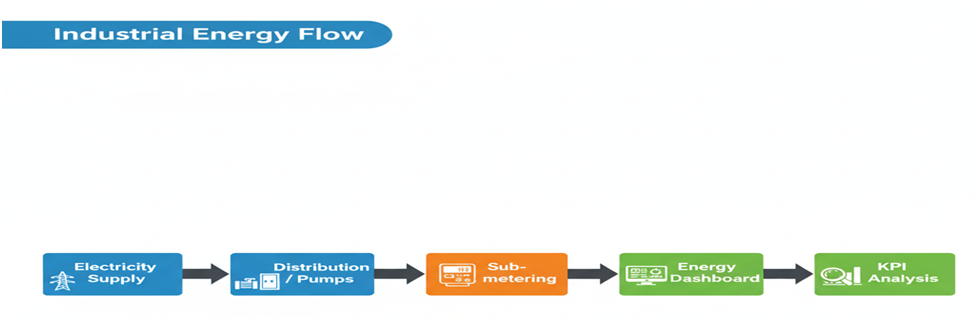
Example 1 – Industrial Energy Flow
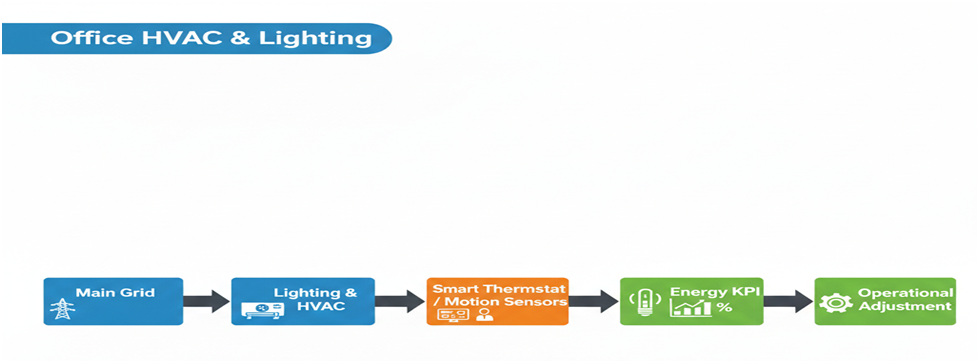
Example 2 – Office HVAC & Lighting
Example 3 – Boiler System with Economiser
Section 4: Vocational Application Tips
- Always link terminology to operational use.
- Consider cost, safety, and efficiency trade-offs when selecting technical solutions.
- Record terminology use in reports, SOPs, audits, and dashboards.
- Relate terms to UK compliance: ESOS, Part L, ISO 50001.
- Use visual aids in training, inductions, and workplace communication to reinforce understanding.
Section 5: Learner Task
Instructions:
- Match all the key terms to their visual symbols.
- Choose one workplace scenario from the examples provided (Industrial, Office, Residential).
- Select at least three key terms and:
- Explain how each term is applied operationally in the scenario
- Describe expected energy savings, efficiency gains, or compliance improvements
- Write a short reflection (200–250 words) linking vocabulary to workplace actions.