
Simplifying Energy Management Concepts – Level 3 Concept Explainer
Technical and Operational Energy Management
Purpose
This task aims to simplify complex technical energy management concepts for learners by linking theory to practical applications. It uses examples, diagrams, and simplified explanations to help learners:
- Understand energy system components and operation
- Recognise the impact of technical, operational, and behavioural practices on energy efficiency
- Make informed decisions for energy optimisation
- Apply UK regulatory requirements in practical scenarios
Section 1: Understanding Energy Systems
Theory:
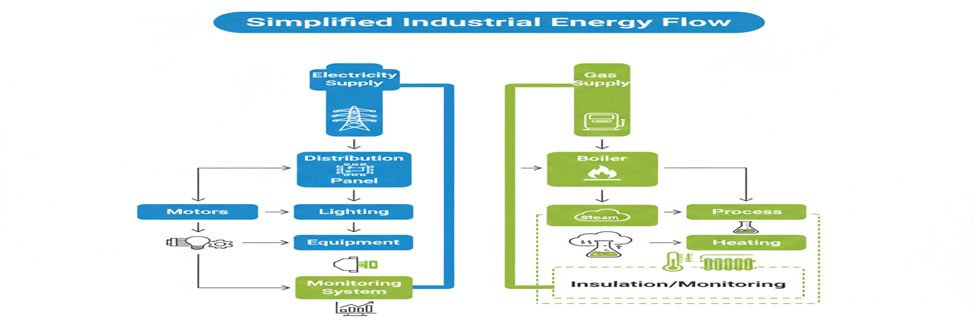
Energy systems include all equipment, machinery, and infrastructure used to convert, transfer, or consume energy. In industrial, commercial, and residential contexts, common energy systems include:
- Electrical distribution systems – mains, panels, transformers, and sub-meters
- Heating, Ventilation, and Air Conditioning (HVAC) – boilers, chillers, air handling units, heat pumps
- Industrial process systems – compressors, motors, pumps, conveyors
- Lighting and controls – LED, fluorescent, smart lighting
Visual Example:
Vocational Tip:
- Understanding how energy flows through a system helps identify inefficiencies, e.g., losses in motor drives, leakage in steam lines, or lights left on in unoccupied zones.
Section 2: Operational Efficiency Concepts
Theory:
Operational efficiency is the effective use of energy with minimal waste while maintaining required output. Key elements include:
- Load Matching – Running equipment only at required capacity
- Scheduling – Operating energy-intensive systems during off-peak periods
- Preventive Maintenance – Reducing energy waste due to worn-out or poorly maintained equipment
- Monitoring & KPIs – Using sub-metering, dashboards, and energy logs to track performance
Practical Example:
Industrial Motor:
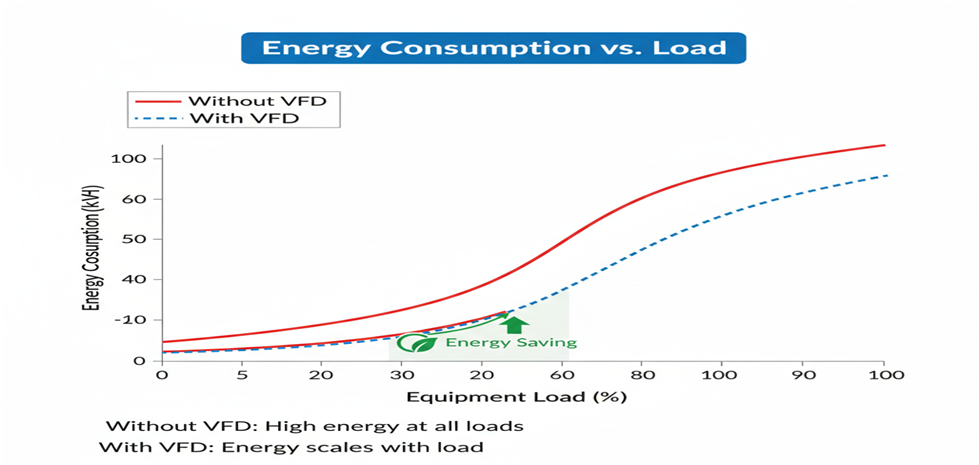
- Running a 100 kW motor at 50% load continuously wastes energy. Implementing a Variable Frequency Drive (VFD) allows the motor to adjust speed to actual demand, reducing energy use by ~25%.
Visual Example:
Section 3: Behavioural Impact on Energy
Theory:
Energy efficiency is not just technical; human behaviour significantly impacts consumption. Key practices include:
- Turning off unused equipment
- Adjusting thermostat and lighting settings appropriately
- Reporting leaks, faults, or inefficiencies promptly
Practical Example:
- In an office, staff leave lights on after hours → Implement motion sensors and automated timers reduces energy waste by up to 20%.
Vocational Tip:
- Combining technical solutions with behaviour change amplifies energy savings and reduces operational costs.
Section 4: Energy Performance Monitoring
Theory:
Monitoring energy consumption allows identification of patterns, anomalies, and inefficiencies. Important methods include:
- Sub-metering for critical equipment
- Energy dashboards for real-time data
- Periodic energy audits aligned with ESOS (UK Energy Savings Opportunity Scheme)
Practical Example:
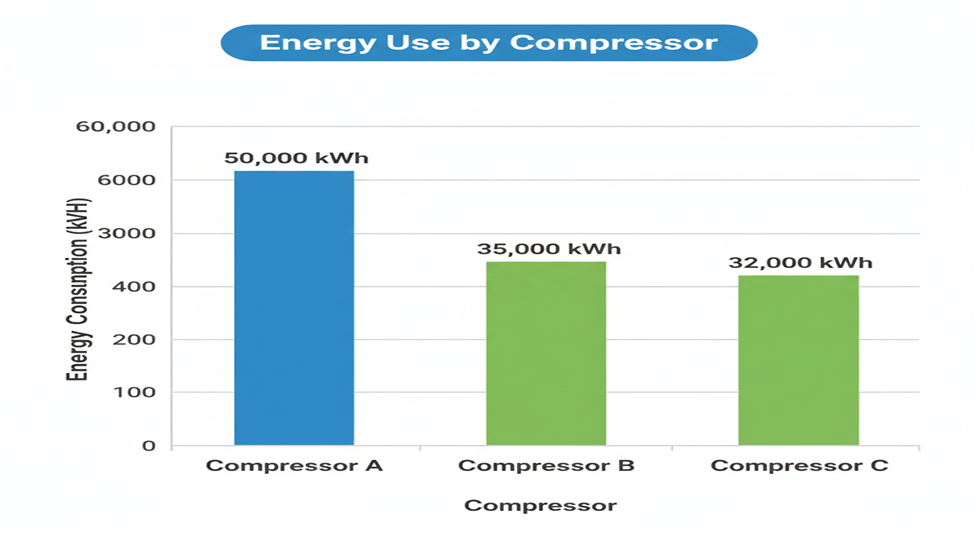
- A factory installs sub-meters for its compressors → discovers one compressor consumes 40% more energy than others → schedule maintenance, implement load balancing → reduces energy costs.
Visual Example:
Section 5: Technical Upgrades and Optimisation
Theory:
Optimisation combines technical, operational, and strategic interventions. Common measures include:
- Variable Frequency Drives (VFDs) – match equipment output to demand
- LED Lighting Retrofit – replaces energy-intensive fluorescent lighting
- Boiler Economisers& Insulation – recover waste heat, reduce fuel consumption
- Smart Controls & BMS – automate schedules, monitor performance, identify anomalies
Practical Example:
- Replacing fluorescent lighting with LEDs in a 10,000 m² office building → reduces electricity usage by 40–50%, paying back investment within 2–3 years.
Vocational Tip:
- Always assess ROI, maintenance, and operational impact before selecting technical upgrades.
Section 6: UK Regulations & Standards
Theory:
All energy management actions must comply with UK laws:
- Energy Performance of Buildings Regulations (EPBR) – ensures buildings meet efficiency standards
- ESOS (Energy Savings Opportunity Scheme) – requires energy audits for large organisations
- ISO 50001 – international standard for energy management systems
- Building Regulations Part L – sets minimum energy performance for new or refurbished buildings
Practical Example:
- Before upgrading boilers, check Part L compliance and report savings through ESOS to ensure legal adherence and eligibility for incentives.
Learner Task
Instructions:
- Choose one energy system (industrial, commercial, or residential) discussed above.
- Create a simple concept explainer sheet (~500 words) that includes:
- Key technical and operational conceptsHow they impact energy efficiencyAt least one vocational example
- Visual (diagram or chart) to illustrate energy flow or optimisation