
Introduction to Energy Management: Level 3 Concept Guide
Introduction to energy management
Purpose
This task is designed to simplify complex energy management theories and show their practical application in workplace settings. Learners will gain a clear understanding of key concepts, principles, and tools used in energy management, enabling them to make informed, practical decisions aligned with organisational objectives and UK regulations.
Key outcomes include:
- Ability to explain core energy management concepts in plain, actionable terms
- Understanding the link between theory and workplace application
- Awareness of compliance obligations under UK energy laws
- Visual representation of technical principles to enhance comprehension
Section 1: Fundamental Concepts of Energy Management
Energy Efficiency
Definition:
- Using less energy to provide the same service or output.
Workplace Example:
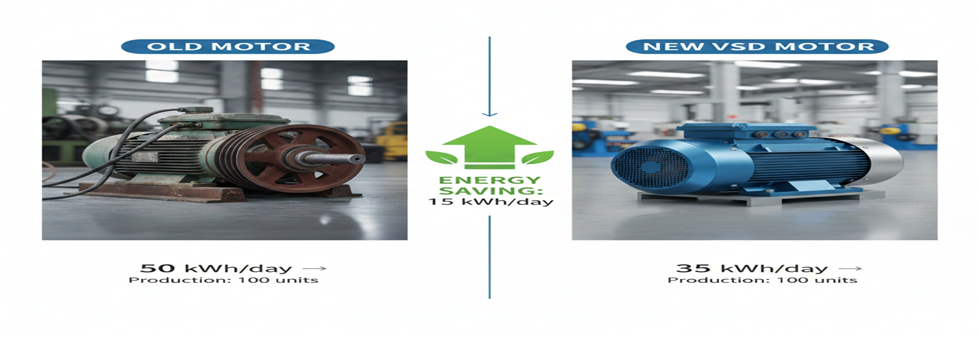
- Replacing an old electric motor with a variable speed drive (VSD) motor reduces electricity use in a manufacturing line without affecting production output.
Visual Representation:
Competency Link:
Energy managers must identify areas for efficiency improvement and calculate potential savings.
Energy Conservation
Definition:
- Reducing energy consumption by changing behaviour or operational practices.
Workplace Example:
- Encouraging staff to turn off non-essential lighting and equipment after hours in a retail store.
Visual Representation:
| Action | Before | After | Saving |
| Lighting on 24h | 500 kWh/week | 350 kWh/week | 150 kWh/week |
Competency Link:
Energy managers must lead behaviour change initiatives to conserve energy.
Sustainable Energy Practices
Definition:
Integrating long-term environmental, economic, and social considerations in energy use.
Workplace Example:
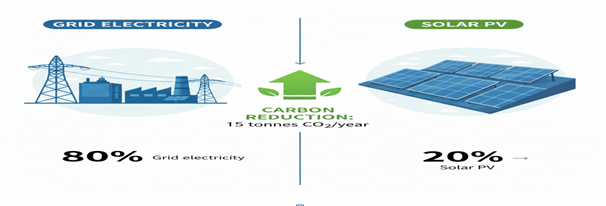
- Installing rooftop solar PV to reduce reliance on grid electricity and cut carbon emissions in an office building.
Visual Representation:
Competency Link:
Aligns operational decisions with corporate sustainability and net-zero targets.
Section 2: Key Tools and Techniques
Energy Audits
Purpose:
- Identify energy wastage, inefficiencies, and improvement opportunities.
Example:
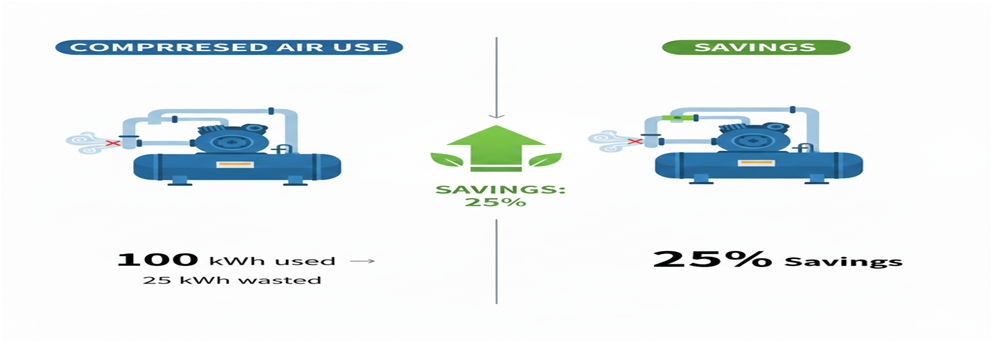
- A factory audit finds 25% air leakage in compressed air systems. Fixing leaks saves £20,000/year.
Visual Representation:
Energy Baselines
Purpose:
- Establish historical consumption patterns to measure improvement.
Example:
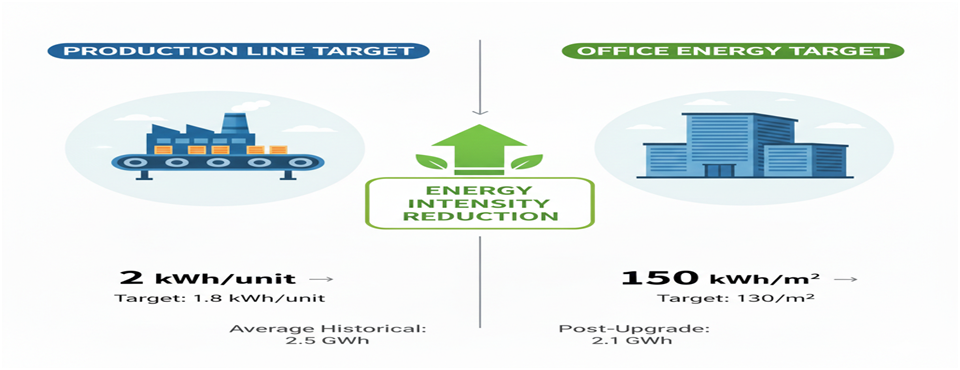
- Hospital electricity consumption averaged 2.5 GWh/year over 3 years. After upgrades, consumption drops to 2.1 GWh/year.
Visual Representation:
Key Performance Indicators (KPIs)
Purpose:
- Quantitative measures to track energy performance.
Examples:
- kWh per production unit (manufacturing)
- kWh per m² of office space
- CO₂ emissions per employee
Visual Representation:
Monitoring & Targeting (M&T)
Purpose:
Ongoing measurement to identify trends and prevent energy waste.
Example:
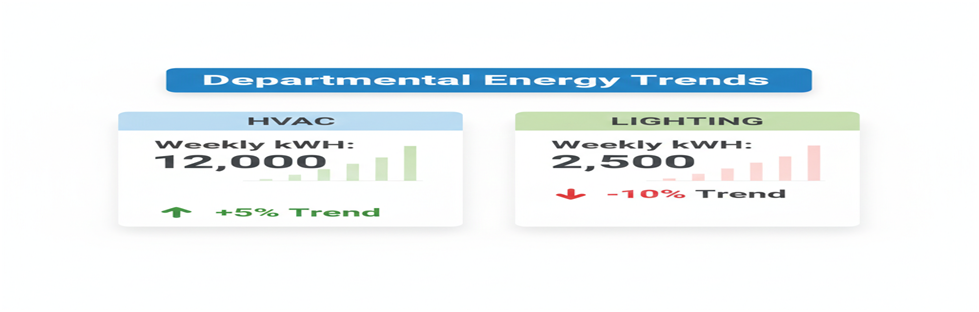
- Installing sub-meters for HVAC and lighting allows weekly tracking and early detection of abnormal energy use.
Visual Representation:
Section 3: Responsibilities of an Energy Manager
- Operational Role: Identify inefficiencies, implement solutions, and monitor results.
- Strategic Role: Align energy targets with organisational objectives.
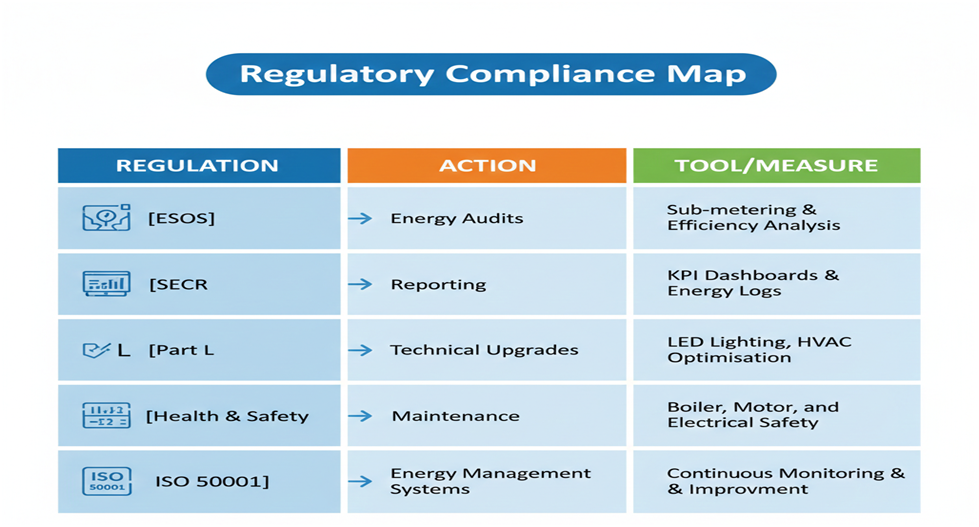
- Regulatory Role: Ensure compliance with UK laws such as:
- Energy Savings Opportunity Scheme Regulations 2014
- Streamlined Energy and Carbon Reporting Regulations 2018
- Climate Change Act 2008
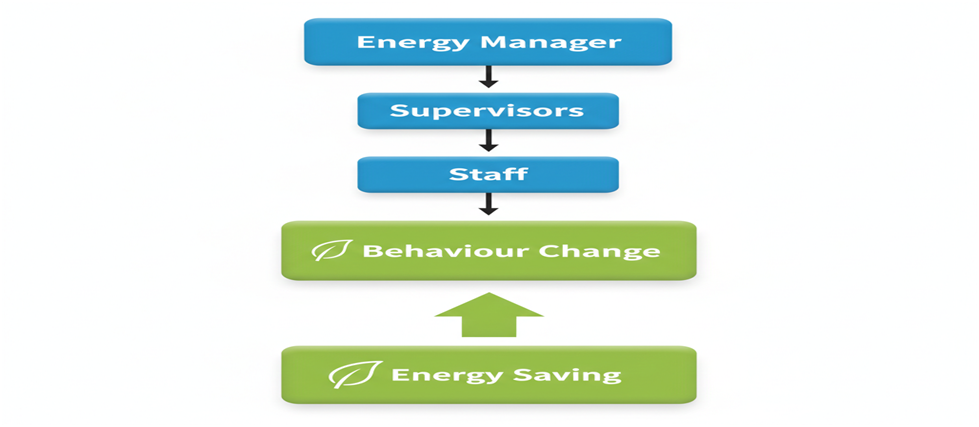
- Leadership Role: Promote staff awareness, training, and engagement in energy conservation.
Visual Example of Leadership Flow:
Section 4: Global Energy Trends Affecting UK Organisations
- Rising energy prices → Focus on efficiency
- Net-zero 2050 commitment → Long-term sustainability planning
- Renewable energy integration → Opportunities for cost savings and reduced carbon footprint
- Carbon reporting requirements → Compliance and corporate reputation
Workplace Implication:
- Energy managers must incorporate these trends into investment, procurement, and operational decisions.
Section 5: Example – Practical Application
Scenario:
Medium-sized office building in Manchester
- Electricity: 400,000 kWh/year
- Gas: 150,000 kWh/year
- Old gas boiler: 75% efficient
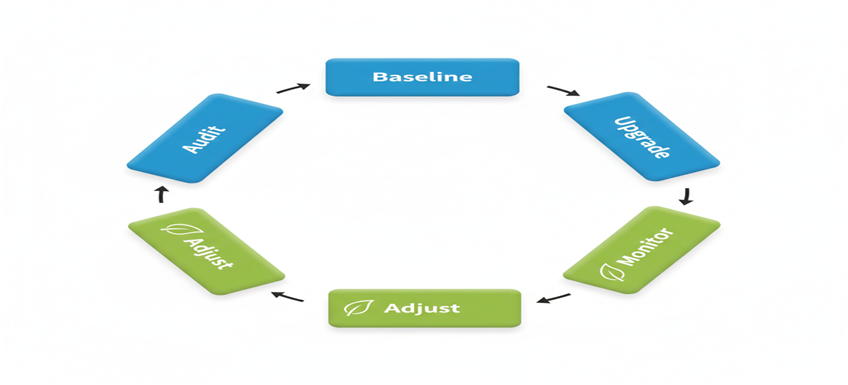
Step 1: Conduct energy audit → Identify boiler inefficiency and lighting overuse
Step 2: Baseline → 550,000 kWh/year total
Step 3: Upgrade boiler (90% efficiency) and install LED lights → Expected reduction 20%
Step 4: Set KPI → kWh/m² target for next year
Step 5: Monitor monthly → Adjust HVAC schedules based on occupancy
Visual Flow:
Learner Task
Using the Concept Explainer Sheet above, prepare a short practical report (700–900 words):
- Describe how you would monitor and evaluate the improvement.
- Select one energy management concept (Efficiency, Conservation, or Sustainable Practice).
- Provide a workplace example where this concept could be applied.
- Explain which tools or techniques you would use to implement it.
- Identify one relevant UK regulation affecting your chosen example.