
From Theory to Understanding: Concept Explainer Sheet in Energy Efficiency and Motivation
Energy Efficiency, Behavioral Change, and Motivation
Purpose
The purpose of this KPT is to provide learners with clear explanations of key concepts in energy efficiency, behavioral change, and motivation. Learners will:
- Understand how human behavior impacts energy consumption
- Apply behavioral theories to workplace interventions
- Simplify complex energy management concepts into practical strategies
- Use examples and visual illustrations to relate theory to practice
- Ensure workplace strategies are compliant with UK legislation and operational standards
This sheet serves as a bridge between theory and practice, enabling learners to implement effective energy efficiency programs.
2. Core Concepts Explained
2.1 Behavioral Influence on Energy Consumption
Theory:
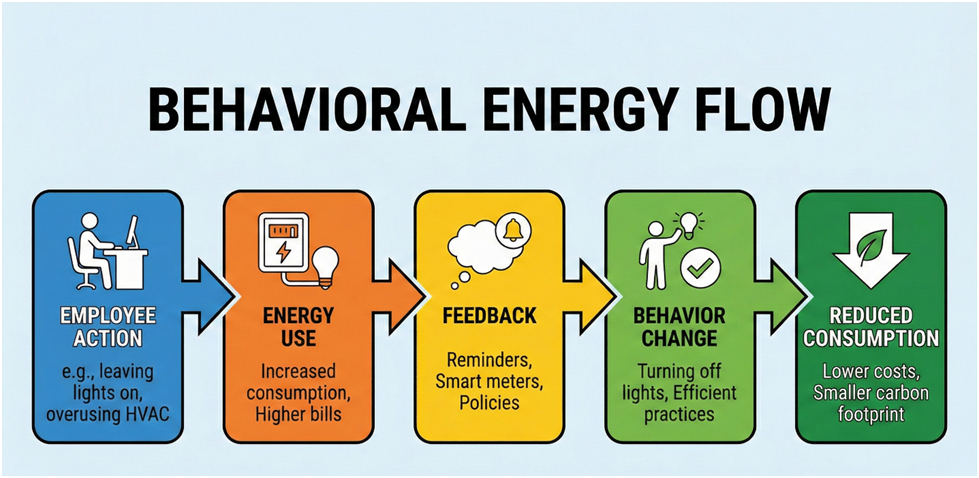
Human actions, habits, and routines heavily influence energy use. Even small inefficiencies (leaving lights on, overusing HVAC) can have major cumulative impacts.
Vocational Example:
- In an office, employees often leave computers on overnight. Behavioral nudges, like reminders on screens or automatic shutdown policies, reduce wasted energy.
Visual:
Key UK Regulation Link:
SECR requires organizations to report energy use, motivating managers to implement behavioral controls.
2.2 Motivation and Energy Efficiency
Theory:
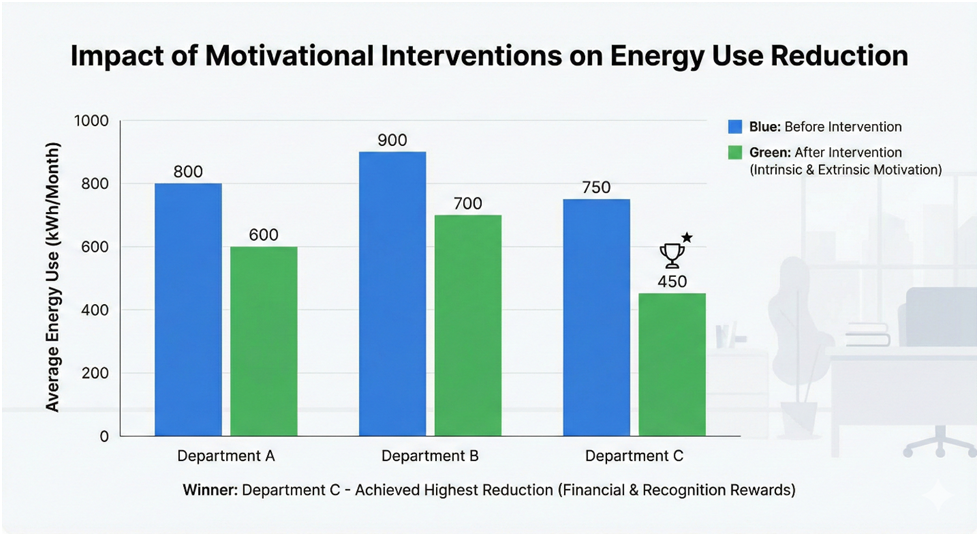
Motivation drives employees to adopt energy-efficient practices. Two types:
- Intrinsic: Satisfaction from contributing to sustainability
- Extrinsic: Rewards, recognition, or financial incentives
Vocational Example:
- Departments compete to reduce electricity usage. Winners receive recognition or small rewards, encouraging wider adoption of energy-saving practices.
Visual:
Key UK Regulation Link:
ISO 50001 emphasizes employee engagement and continuous improvement. Motivated staff are crucial to achieving compliance.
2.3 Behavioral Nudges
Theory:
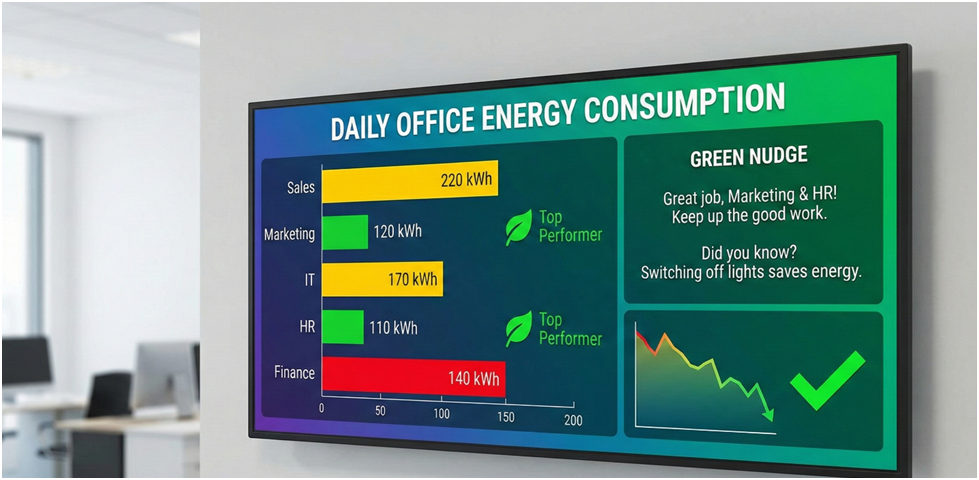
Small changes in the environment can “nudge” employees toward desired behavior without coercion.
Vocational Example:
- Placing signs near lights: “Switch off when leaving”
- Centralized energy dashboards showing real-time consumption
Visual:
Key UK Regulation Link:
Aligns with HSE requirements for safe and non-disruptive operational interventions.
2.4 Feedback Loops
Theory:
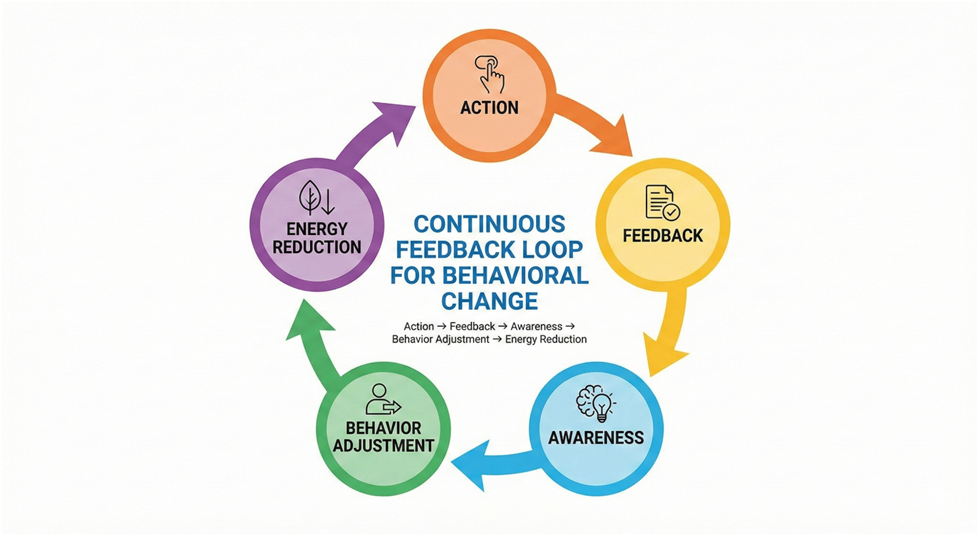
Continuous feedback helps employees understand the impact of their actions and encourages sustained behavioral change.
Vocational Example:
- Weekly email reports showing energy savings linked to specific staff behaviors
- Monthly team meetings to discuss energy efficiency achievements
Visual:
Key UK Regulation Link:
SECR encourages organizations to measure, report, and communicate energy performance, reinforcing feedback loops.
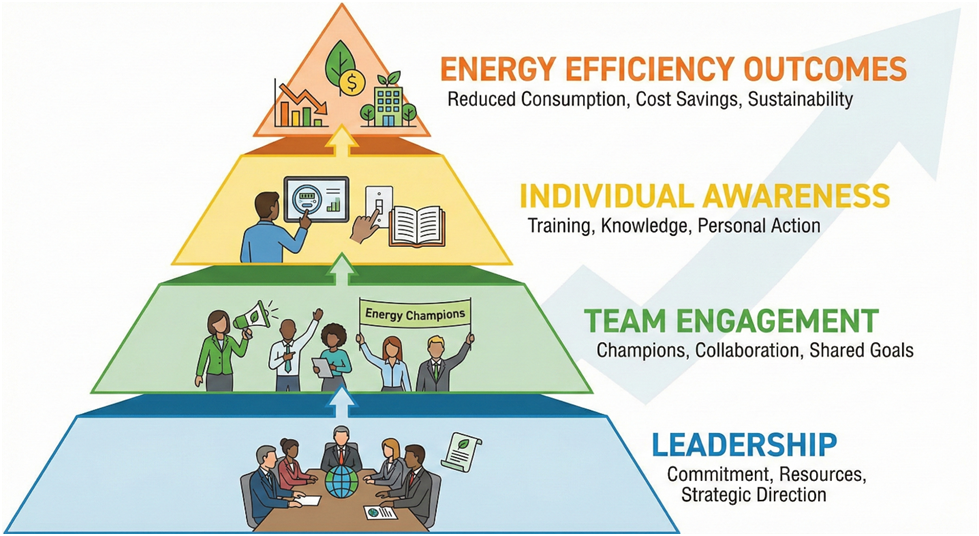
2.5 Culture of Energy Awareness
Theory:
A workplace culture that prioritizes energy efficiency leads to lasting behavioral change.
Vocational Example:
- Company integrates energy efficiency into onboarding programs
- Departments have “Energy Champions” to encourage peers
Visual:
Key UK Regulation Link:
ISO 50001 and ESOS highlight the importance of organizational culture in achieving energy management compliance.
2.6 Measuring Behavioral Interventions
Theory:
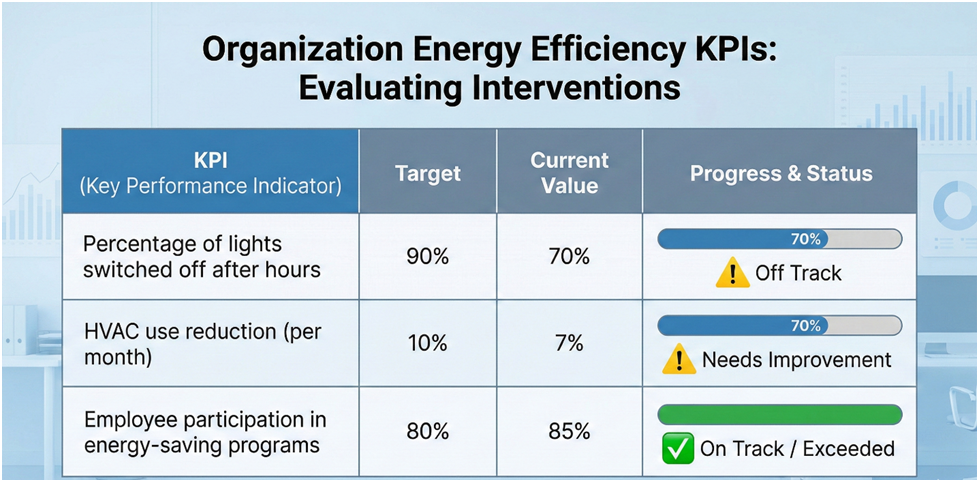
To evaluate interventions, organizations need KPIs to measure participation, energy savings, and impact on operations.
Vocational Example:
- KPI examples:
- Percentage of lights switched off after hours
- Energy reduction per department per month
- Employee participation in energy-saving programs
Visual:
Key UK Regulation Link:
Supports compliance with SECR, ISO 50001, and HSE, ensuring interventions are effective and measurable.
3. Practical Example Linking Theory to Workplace
Scenario:
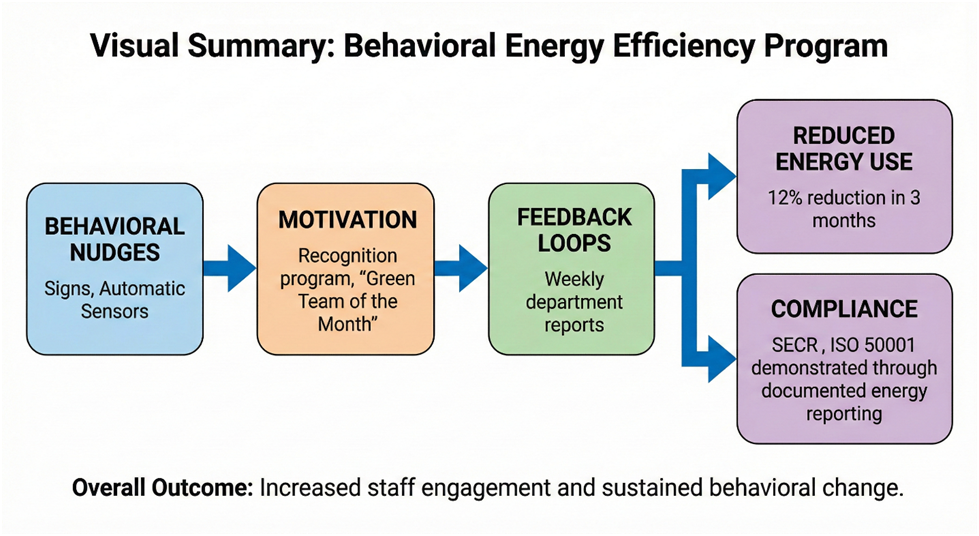
Office building with high energy use due to lights and HVAC overuse.
Behavioral Concepts Applied:
- Feedback Loops: Weekly department reports
- Motivation: Recognition program for “Green Team of the Month”
- Behavioral Nudges: Signs and automatic sensors
Outcome:
- 12% reduction in electricity usage in three months
- Increased staff engagement
- Compliance with SECR and ISO 50001 demonstrated through documented energy reporting
Visual Summary:
4. Competency Focus
Learners using this sheet should demonstrate:
- Understanding of behavioral influence on energy use
- Ability to implement motivational strategies for energy efficiency
- Application of nudges, feedback loops, and culture change in workplace scenarios
- Alignment of interventions with UK legislation and operational standards
- Measurement of effectiveness using KPIs
5. Learner Task
Objective:
To demonstrate understanding of behavioral concepts and their application in a real workplace scenario to improve energy efficiency.
Instructions:
- Select a workplace scenario (e.g., office, production floor, or warehouse).
- Identify three behavioral concepts from this sheet that could improve energy efficiency.
- Describe how you would implement these concepts practically, linking them to relevant UK legislation or standards.
- Suggest one KPI to measure the effectiveness of your intervention.